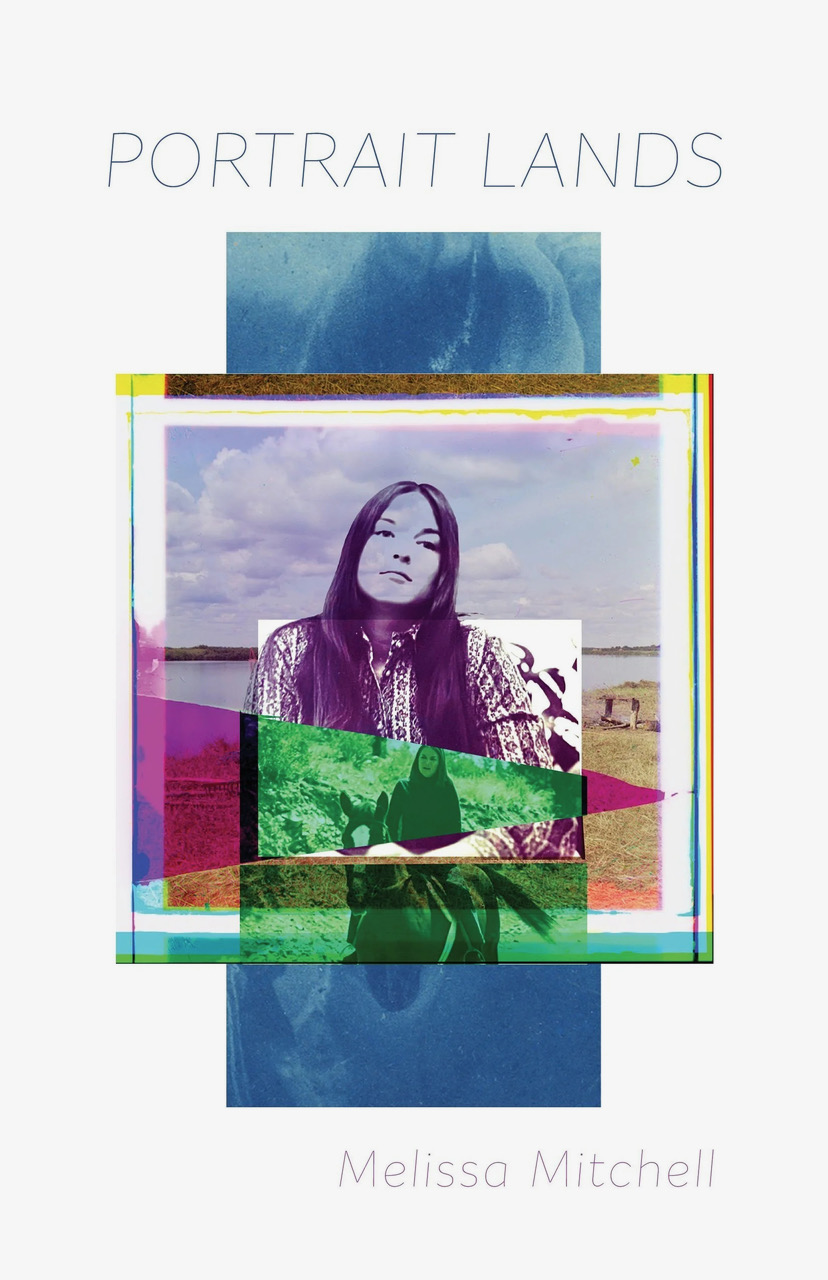
Traveling the Poetry River with Fort Collins' Poet Laureate Melissa Mitchell on her Debut Chapbook, Portrait Lands
Melissa Mitchell is the poet laureate for Fort Collins. Her chapbook, Portrait Lands, was published by Finishing Line Press as part of its New Women's Voices series. Mitchell is a multi-faceted writer and artist, who has published music essays, online teen advice columns, elearning training materials and the animated children's web series, "Little Roar & His Big Family." She received her bachelor's degree in creative writing from Colorado State University.
KW: Congratulations, Melissa, on your first chapbook published as part of Finishing Line Press New Women's Voices. Finishing Line Press gets so many submissions, so obviously, something about your lovely chapbook caught the judge's eye. I can't help, though, share these funny words about the chapbook from Henry Mills Alden in 1890:
from Poet's House
You have to read the whole excerpt: it's hilarious. The chapbook has obviously come into its own since its, apparently, inglorious start. (Finishing Line published my pandemic one as a semi-finalist for its Open Chapbook competition and I still love it.) I've been doing these interviews for quite some time now and I'm always interested in seeing how so many full-length books seem to come out of an initial chapbook. Can you talk about what drew you to the chapbook, how you went about creating it, and what plans you may or may not have for either developing it into a full collection or simply keeping it as a chapbook?
MM: Thank you so much! I'm honored to be interviewed by you and appreciate these interesting questions. Now I want to spend some time with your chapbook and other work! I'm very amused by Mr. Alden's opinion of the "lower mass of humanity" and their chosen vehicle for publishing poems. I'm a proud member of that distinction. As for how I went about creating my "squalid" product, the collection of poetry you see today is not its original form by any means. It began in fits and starts of other versions of full collections, but the theme, the thread that tied the poems together, didn't emerge to me until I scrapped my original collection and started over. At first, I thought maybe it was a collection of nature poems. But something wasn't right, so I kept rearranging and leaving poems out, adding new poems I'd written, until something came into focus that I hadn't yet seen—a selection of poems, though short, that did well to map the changes and processes I'd experienced since my mom passed away in 2021. I landed with Portrait Lands, the chapbook. I have toyed with the idea of expanding it into a full collection, but something about this small work feels complete. I am very drawn to hybrid works and have a dream of moving into a larger work that includes prose, poetry, and illustrations, but I think it will be a little different, and from the perspective of a little further down the river.
KW: I found myself really drawn into the structure of so many of your poems in this chapbook. The structures don't seem to be formal structures, but rather organic. There's long been a push and pull between which type of structure is "best," whatever that means. Edward Hirsch has a wonderful piece on the arguments around formal and organic form in which he quotes this from Coleridge: "The organic form on the other hand is innate, it shapes as it develops itself from within, and the fullness of its development is one and the same with the perfection of its outward Form."
This is in response to what Coleridge saw as the mechanical nature of "pre-determined form." But discovering organic form is not an easy endeavor: the poet must be open in the process of writing to even the subtlest movements that language in its sounds, rhythms, and echoes suggest. In your book, you seem to love form. Your forms are interesting. They cause the reader to consider multiple layers of meaning because of how you break lines/whole poems, use italics/parentheses, white space, and the strategic placement of stanzas across pages (I'm thinking here of your wonderful ending poem, When The Lilies Start to Bloom). Some of us plod along happy to just get a few lines down, let alone think about the shape of anything. Talk to us about form, your forms, and how they shape your work or how your work shapes them.
MM: My answer is a little bit an answer for your first question as well. I think I was spending, and still do here and there (it's hard not to), too much time trying to do something—forcing my work into an arbitrary collection or form (or lack thereof). I wasn't doing very much listening or letting things be exactly what they were or just seeing what might happen if I followed a meandering path rather than filling an arbitrary box I designed out of what I felt was necessity. I read something Ocean Vuong said about form that really resonates with me—how form is an engine, and how sometimes you have to follow it where it takes you, and sometimes that is to the poem's complete collapse. Only then can you re-imagine it in the form it was meant to be. I think for Portrait Lands as a collection, and for many of the poems individually, they found their collapse. Something wasn't working, and I was ready to toss them in the bin. But I decided to try again and do it differently. Listen a little bit more. Follow the path that emerged. For a long time, I didn't understand poems that broke out of left-justification on the page. I would read them and ignore their shape, deliberately blocking out any "loosey goosey" play, but that is because my comprehension wouldn't allow it—it added a layer that I wasn't ready to consider. And so it was the same with my writing. My friend and I took a month-long workshop that focused on the poetic line that encouraged a lot of, as my friend put it, "loosey goosey" line work. That experience was a good push in the direction of experimentation. A lot of the poems that travel around the page here are experiments—what would happen if I tried this? Where are the words taking these lines? Follow, don't lead. That's sort of how they evolved.
KW: The extended metaphor of landscape is obviously an important component of your chapbook. It seems to serve as a vehicle for discovering and exploring emotion and a kind of divination into a past the seems to be unbearable to the speaker in these poems. It also maps out this journey to joy, I'll call it, moving from the "historic fires" and "hot steam ash" at the beginning of this chapbook to, well, those blooming lilacs in that last poem of the book and that beautiful moment in this poem when you simply drop a word down to the next line:
…rolling ocean in
the shape of love when your heart is broken closed open more do
not forget I know a thing or two about love it's the bud you spot
coming up and out of the ground through spring snow and you say
dear
(And let's add to our list of your organic forms the "hell with punctuation" form!) I noticed too that your epigraphs beautifully anticipate the shape of this metaphoric movement between the arid and the waters that mean not just grief, but "every bluest sky/all at once forever where we//begin." Creating meaningful transforming metaphor without smacking the reader over the head is so difficult!! Talk to us about your journey in writing these poems with this sustained metaphor of landscape.
MM: When I was in college, there was a photography professor who made the statement that men typically photograph landscapes and women photograph people. There was a lot to unpack with that statement, and something the professor didn't spend too much time on after having said it, but it stuck with me. I've unpacked it on my own—maybe even with Portrait Lands, ha! For me, in my writing, I don't often come out with it. The meaning just sort of falls out. I wonder if that's a part of believing that words can take you so far, and then your actions go further to show the integrity and convey the meaning of your existence. So how do you show and express the importance and very nature of our internal landscapes? In using the language, "portrait lands," and in using landscape as an extended metaphor, I want to smash the two ideas together that our land and our humanity are not separate—one is not more rational or emotional than the other (nor should it be)—we mirror each other and we can learn from this if we figure out how to listen. As for the lilies poem, it came out all at once, and I didn't use any punctuation at all because that's how it felt to me, all at once and more. No beginning and no end. Just evolving.
KW: First chapbook, poet laureate of Fort Collins, lots of publications (OMG! I really like the look of that Blue Heron Review!) and projects galore. What's next?
MM: I want to keep doing what I'm doing! I love finding ways to connect to people and to see people make connections to other people and in their own minds. I have an idea for a longer work, like I said, that includes prose and poetry and something visual, be it photography or illustrations or both. I want it to be beautiful and emotional. I studied creative writing in college and fiction was actually my focus. When I started writing poetry I said it was because I was a lazy writer. I didn't think I had the patience and diligence to complete something like a novel, so when I returned to writing after a long break, poetry felt more expedient. How funny. I'm so glad I discovered poetry. But I say all that, because I would love to write a play. It's a secret dream. So maybe I should go do that.

